
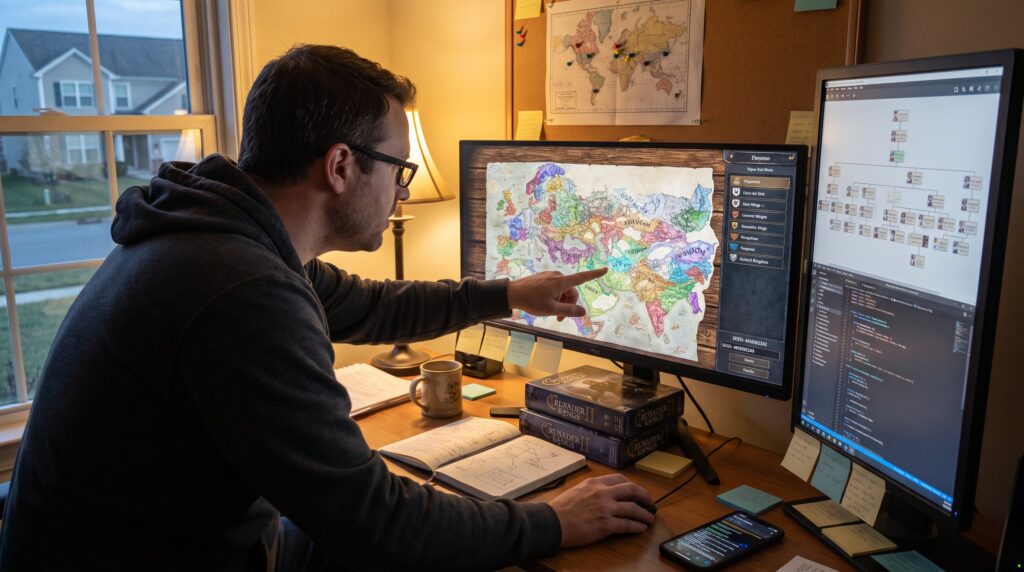
How CK2Generator Builds Custom Kingdoms, Cultures, and Religions is both a technical walkthrough and a design primer for modders and players. CK2Generator replays history across the Crusader Kings II map, simulates births, wars, marriages, and successions, then writes out title histories, culture files, and religion definitions. This guide explains the concrete steps the tool uses to produce playable kingdoms, distinctive cultures, and living religions, then points modders toward practical editing, export, and troubleshooting practices they can apply to create polished alternate histories.
Table of Contents
ToggleKey Takeaways
- CK2Generator creates custom kingdoms by simulating dynamic historical events like births, wars, and successions to produce realistic title histories and feudal structures.
- The tool generates distinctive cultures by combining CK2 cultural parameters with unique naming languages, traits, and assimilation rules influencing inheritance and diplomacy.
- Custom religions are built through doctrinal choices, rites, holy sites, and heresies that affect gameplay mechanics such as pilgrimages and holy wars, enhancing historical plausibility.
- Territorial changes and empire formations in CK2Generator emerge organically from simulated conflicts, ensuring outcomes that mimic player-driven campaigns.
- Modders should export, test locally, and iteratively refine generated files to fix syntax issues or improbable historical results for polished alternate histories.
- Selecting custom maps and tweaking generation options allows players to create varied geographies and cultural distributions, expanding CK2 gameplay possibilities.
How CK2Generator Generates Custom Kingdoms: Workflow, Territory, And Politics
Fact first: CK2Generator produces full title histories and de jure kingdoms by simulating population dynamics and armed conflict across the loaded CK2 map. The generator begins by reading the chosen CK2 installation and map, then creates seed populations in provinces and runs a turn-based simulation of births, deaths, marriages, claims, wars, and conquests until a cohesive medieval world emerges.
In practical terms, the workflow has clear stages: map load, seed settlement, dynastic simulation, conflict resolution, and output. During map load the tool imports province IDs and adjacency so holdings and movement behave like the game. In the settlement stage it assigns initial rulers, cultures, and holdings: then, for hundreds or thousands of simulated years, it applies probabilistic events, childbirth rates, warrior skirmishes, inheritance deaths, to shape who holds which titles. The result is a set of title histories and de jure definitions that reflect realistic feudal fragmentation and consolidation.
A key technical point: territory changes are not hand-painted. They emerge from simulated wars and claims. That makes empires form organically, with palatinate counties changing hands the same way a human campaign would. When outputting results the generator writes discrete files that CK2 recognizes: title history files, dynasty lists, and modified de jure outlines. Modders who want a one-click alternate history can then package those outputs as a mod. Players who want different geography first should select a custom map: the generator supports alternate maps to keep province IDs aligned.
For a step-by-step walkthrough and examples of using one-click map creation, consult a practical guide on creating random maps with CK2Generator which covers map selection and export options. That resource shows how map choice alters settlement patterns and the scale of resulting kingdoms.
How Custom Cultures Are Created: Traits, Names, Succession, And Assimilation
Fact first: CK2Generator randomizes cultures by combining CK2 culture parameters with new naming languages, trait packs, and assimilation rules to yield distinct identity groups. The tool uses CK2’s culture schema, culture groups, male/female name lists, and trait modifiers, as a template, then produces new culture entries that include unique names, naming conventions, and cultural drift behavior.
Names matter: generated cultures come with language-like name lists used for characters, provinces, and realms. That naming language ties into succession behavior because culture influences inheritance preferences and accepted crown laws. When a newborn inherits titles, the simulation checks cultural compatibility, succession laws, and existing claims: that drives whether a culture spreads via marriage or is assimilated under conquest.
Traits are assigned both procedurally and as consequences of events. A culture that experiences frequent raiding in the simulation will produce more martial traits among its nobles: one that has long peace may yield learning or sedentary traits. These trait distributions are written into culture definitions so in-game characters display believable personality clusters.
Assimilation follows explicit rules: when a ruler conquers a province, the generator factors in province size, existing cultural settlement, and the ruling dynasty’s cultural tenacity to decide if assimilation occurs over generations or stays resistant. Succession systems, gavelkind, elective, primogeniture, are respected, and the generator can create cultures with preferred succession flavors. For troubleshooting edge cases and culture-change impacts on characters, see the guide that explains culture-change consequences in Crusader Kings II, which highlights how failures to change culture affect names and diplomacy.
How Custom Religions Are Designed: Doctrines, Mechanics, Rites, And Heresies
Fact first: CK2Generator builds religions by composing doctrine sets, rite lists, holy site assignments, and potential heresies, then exporting religion files that the game loads like any native faith. The generator reads CK2 religion parameters and uses those building blocks to create believable pagan and heterodox religions with names, priesthood mechanics, and doctrinal modifiers.
Doctrines and rites are chosen to affect gameplay tangibly. A generated religion may favor tribal mobilization and give bonuses for raiding, or it might include communal rituals that boost stability. The tool assigns holy sites based on simulated cultural centers and political capitals, so pilgrimage mechanics and holy wars target sites that emerged during the world-run rather than arbitrary locations.
Heresies are handled probabilistically. In long simulations, a minority doctrinal shift in a populous realm can produce a heresy: the generator captures that by creating variants tied to specific provinces and dynasties. Those heresies include their own rites and can spawn cults or reform movements, which then alter the map via conflicts and schisms.
Mechanically, the generator outputs religion group files, graphical culture links, and event triggers where needed so the in-game effects, conversion rates, priestly power, excommunication, work without manual edits. For context on how the community covered this tool, a long-form feature about new-world generation explains how CK2Generator reshapes maps and faiths in practice, demonstrating the historical plausibility that arises from these mechanics.
Conclusion: Best Practices And Where To Go Next With Your CK2Generator Creations
Fact first: export clean, test locally, and iterate. Modders should run a generation, load the resulting mod in a clean save, and play key moments to confirm succession, culture names, and holy sites behave as intended. When something breaks, inspect the generated files in the game’s culture and religion folders and correct syntax or naming language conflicts.
Practical next steps: start with the base map or a known alternate map, tweak generation options conservatively, and export early versions for playtesting. When satisfied, package the outputs as a mod and document any manual edits.
A candid warning: procedural history sometimes produces improbable dynasties or isolated cultures that look awkward in the late game. Expect to fix a handful of title histories or rename a problematic religion manually. The payoff is a fresh, playable world history that reflects real political churn and cultural diversity, one that players and streamers will find unpredictable and engaging.
For additional generation tips and customization examples, explore resources on enhancing CK2 gameplay and one-click map creation to expand how CK2Generator integrates with existing mod workflows.