
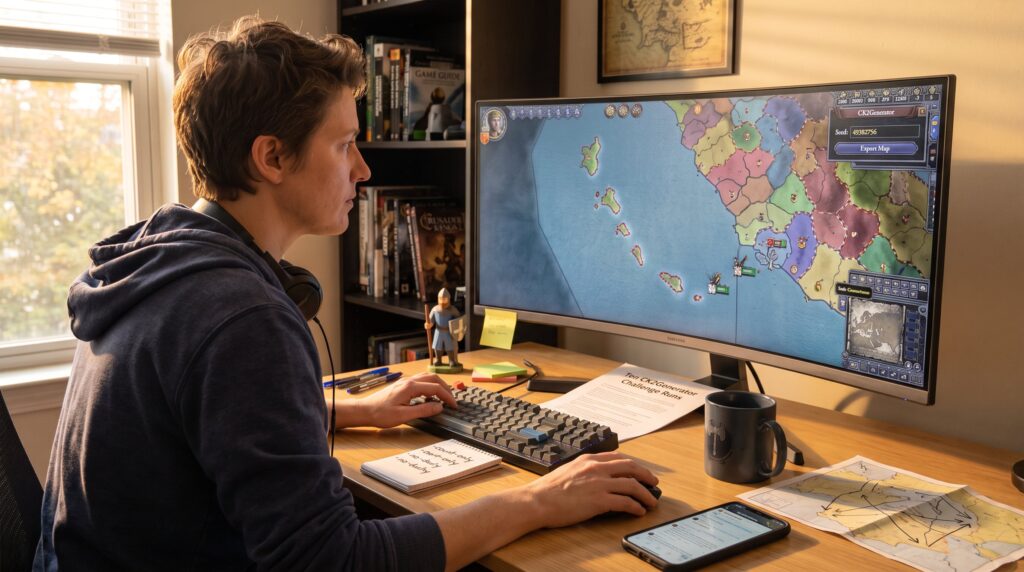
CK2Generator puts unpredictable worlds into Crusader Kings II play, and this list shows ten challenge runs that turn that randomness into dramatic campaigns. The article opens with clear setup: how to use CK2Generator to make balanced starts, then walks through ten creative run concepts from forgiving to brutal, and finishes with concrete survival priorities. Players who want fresh maps, odd cultures, or impossible dynasties will find immediately actionable ideas and tooling notes they can export into CK2 within minutes.
Table of Contents
ToggleKey Takeaways
- CK2Generator lets you create balanced, dramatic Crusader Kings II campaigns by customizing maps, cultures, and dynasties for unpredictable yet fair starts.
- Ten challenge runs range from easy coastal counts to brutal single-county starts surrounded by hostile empires, each testing different strategic skills.
- To survive high-difficulty runs, prioritize securing alliances through marriages, building economic stability, and upgrading castles to maximize levies.
- Use CK2Generator options to craft fragmented realms or isolated minorities, turning map quirks into tactical advantages during campaigns.
- Aggressive intrigue and careful claim fabrication are crucial early tactics especially for small or isolated starts in Crusader Kings II.
- Learning from mistakes, such as overextension, and adapting strategies like focusing on navy for island runs improves long-term success in challenge runs.
How To Use CK2Generator To Create Balanced, Dramatic Challenges
Start with the goal: create a playable but tense world. CK2Generator lets the user load a Crusader Kings II installation, pick a base or alternate map, and tune generation options so the map both surprises and remains fair. First, select the CK2 installation directory and a map seed. Then pick balanced-style settings to avoid immediate unwinnable starts while keeping edge-of-collapse drama. Balanced seeds spread holding types and government forms more evenly, which creates contests for mid-sized dukes instead of alpha empires steamrolling the map.
Practical steps matter. Export the generated history as a new mod and enable it in CK2’s launcher: this preserves new cultures, religions, and dynasties as playable content. For a short tutorial on one-click map generation, CK2Generator provides a hands-on walkthrough that shows the export process and common pitfalls. The walkthrough explains how to target specific generation features, like fragmented realms or isolated minorities, so the player can design a run’s difficulty before the first save.
Why balanced choices? Balanced configurations let a challenge emphasize limited resources, not impossibility. A player who wants a tense mid-game can start as a small-count with rich neighbors: a player seeking extreme difficulty can choose fragmented feudal seeds or isolated cultural minorities surrounded by hostile faiths. For implementation tips and real examples of the generator in action, the site hosts a short guide on creating epic random maps that demonstrates map options and common export settings.
Common mistakes and fixes. New users often forget to check government seeds and holding spread: that creates starts with no reachable allies or lands with zero levy potential. The fix is simple: rerun generation with an even holding distribution or manually select a nearby duchy with compatible religion. For players who want step-by-step enhancement after generation, a separate guide explains adding custom characters and items to the exported mod so a favored dynasty starts with usable perks.
Ten Creative Challenge Runs From Easy To Brutal (What To Expect)
-
The Fjord Count (Easy). Start as a coastal count on a narrow fjord with two counties and a single sea holding. Expect maritime raids and slow expansion. The player should use navy income and quick marriages to build alliances. This run highlights coastal economics and early skirmishes.
-
The Marcher Duke (Moderate). Play a border duke surrounded by larger realms. Expect frequent border wars and opportunistic holy wars. This run trains defensive warfare and castle upgrades.
-
The Exiled Heir (Moderate). Begin as an exile with a minor claim and no immediate retinue. Expect early mercenary reliance and desperate marriage politics. It forces smart use of favors and intrigue.
-
The Minority Prince (Challenging). Lead a religious or cultural minority in a hostile province cluster. Expect faction revolts and religious conversion pressure. This run emphasizes tolerance management and careful vassal selection.
-
The Trading Oligarch (Challenging). Run a merchant republic or wealthy count in a trade-rich node. Expect assassination attempts and high-stakes diplomacy. This run rewards mercantile focus and retinue dominance.
-
The Island Sovereign (Hard). Hold a small island with few allies. Expect naval blockades and isolation. This run forces emphasis on shipbuilding and strategic marriages.
-
The Doomed Theocrat (Hard). Start as a religious theocracy surrounded by feudal lords. Expect persistent CBs and conversion wars. This challenge tests internal stability and doctrine leverage.
-
The Fractured Empire (Very Hard). Take a mid-tier duke in a fractured imperial region where many small seeds compete. Expect constant conquest and shifting alliances. It rewards opportunistic warfare and timely crown claims.
-
The Bloodline Purist (Brutal). Restrict succession: allow only same-dynasty marriages and refuse land grants outside the family. Expect civil wars and rapid extinction risk. This ironman-style run requires obsessive pedigree management.
-
The Impossible Count (Nightmare). Single-county start inside a hostile empire with neighboring powerful kings and a different religion. Expect early invasion, no safe alliances, and relentless pressure. Survival hinges on immediate fortification, mercenary hires, and perfect intrigue execution.
What to expect across runs. Difficulty rises with isolation, religious difference, and starting military power: the generator can craft each variable. Players should inspect the generated world for weak neighbors and holding distribution before committing to a run. For inspiration on community runs and examples of random-map projects, a long-form coverage of the generator shows how new worlds look in practice.
Survival Tips And Early Priorities For High-Difficulty Runs
Secure alliances and marriage ties immediately. The most reliable early defense is a strong web of kin and allies. In several brutal runs, a single marriage prevented an early annexation. Target small but relevant neighbors: a minor duke ally beats no ally.
Build economic stability first. Upgrade the capital’s income buildings and prioritize castle upgrades that increase levies. A two-castle upgrade pays off in three years by doubling levy output on small holdings, and that swing decides many county-level wars. Use mercenaries only as a bridge when income supports them: early merc pay can bankrupt a county within a decade.
Levy management matters. Small-count starts should maximize their levy by converting tribal or city holdings when safe, or by focusing on garrison improvements. Inspect neighboring holding types and choose expansions that add complementary levies, naval holdings for island starts, cavalry-rich plains for mounted armies.
Exploit generator quirks. CK2Generator can place isolated cultural groups or create fragmented governments, these quirks become tactical opportunities. When facing religious minorities, convert a nearby county with a tolerant ruler to build a buffer. When many small feudal counties cluster near each other, press claims quickly before those micro-realms coalesce into a hostile duchy.
Use intrigue aggressively. Assassination and fabricated claims scale well with low starting power. Fabricate a claim on a weak county while forging alliances: a successful plot to remove a hostile neighbor allows a swift claim press with mercenaries if necessary.
Honor mistakes and adapt. A common early error is overextending into hostile terrain. When that happens, accept temporary setbacks: revoke unhealthy holdings, focus on internal development for twenty years, then strike. Players who document one failed island run report learning to prioritize navy buildings first, this is the kind of concrete lesson that improves later attempts.
Need deeper mechanical help? For targeted tutorials on conquest, claims, and casus belli usage that fit generated worlds, several how-to guides explain easy claim creation and county takeover strategies that align with playstyles focused on slow expansion and political manipulation.
Conclusion
CK2Generator makes fresh Crusader Kings II campaigns possible by exporting new maps, cultures, and histories that test different player skills. The ten challenge runs here offer immediate templates, from forgiving coastal counts to single-county nightmares, and the survival advice gives clear early priorities: secure allies, build income, and exploit generator quirks. Those who use the generator thoughtfully will convert random chaos into personal stories worth saving and sharing.